
Getting Madison County Court Records
Linda L. Smith, Madison County Clerk, is the first contact for records from the six Circuit Court divisions. Start online with MyCase, but use the clerk counter, phone, or mail when a document is absent or certification is needed. No public Clerk records email, drop box, or separate county request form was located.
- Locate the court and case number in MyCase or ask the Clerk about legacy data.
- Name the exact CCS, filing, order, judgment, exhibit, date, and format needed.
- State whether an ordinary or certified copy is required.
- Choose online access, Room 213 counter service, phone coordination, mail, or a public terminal if the Clerk confirms its location.
- Confirm page count, certification, postage, payment method, and return instructions before sending funds.
Mail goes to PO Box 1277, Anderson, IN 46015. The phone is 765-641-9443. The counter is at 16 East 9th Street, Room 213, Anderson, IN 46016. Fax is 765-640-4203, but local fax rules govern filings and do not promise copy delivery.
Madison Court Record Custodians
The Madison County Clerk keeps county trial-court filings and provides ordinary and certified copies. Court administration manages operations, jury work, and related services but is not a substitute clerk. Anderson and Elwood City Courts have their own staff for municipal files. Federal records belong to the Southern District federal clerk.
Transcripts are different. Indiana request guidance directs transcript requests to the court reporter. A CCS, audio item, or screen image does not replace the reporter's certified transcript.
The official Government Center directions source appears below.
The capture anchors in-person Madison County record requests to the correct government building.
Madison County Court Record Types
A docket or CCS is the chronological event index. The document is the actual complaint, motion, response, order, judgment, exhibit, or notice. Certification is a clerk-authenticated copy. Each serves a different need.
- CCS and public case headers
- Pleadings, motions, responses, and service records
- Orders, judgments, dispositions, and sentencing records
- Public civil, criminal, probate, small-claims, and infraction documents allowed by the access matrix
- Certified copies and current court financial records
Public online document coverage varies by code. Criminal online access is often centered on sentencing orders. Many civil and probate codes expose nonconfidential orders, while juvenile and protected matters remain limited.
Small-claims and infraction records can show public orders while other filings remain counter-only. Probate records may expose nonconfidential orders without opening the whole estate file. Family, juvenile, mental-health, and specialty-court information can be sharply limited. The official MyCase access matrix, not a single sample case, is the right guide for deciding whether a Madison County court record should be remotely available.
Madison CCS, RJO, and Orders
The CCS records judicial and filing events in date order. An RJO is a recorded judicial order or other designated order indexed through the CCS. Neither term means that every event row contains the full text of the filed document.
- CCS
- Indiana's chronological case summary, the trial-court docket.
- Docket entry
- A summary row that may point to a filing or order.
- RJO
- A recorded judicial order or designated order, not every procedural event.
- Certified copy
- A copy authenticated by the Madison County Clerk.
When a CCS says an order was filed but no image appears, identify the entry date and request the actual order if it is public.
Certification adds another layer. The clerk certifies the copy, not the summary shown by a portal. If a recipient asks for an order under seal, describe that need when requesting it. If the desired record is a transcript, provide the case and hearing details to the assigned court reporter instead. Sending a transcript request to the Clerk as if it were an ordinary docket copy can delay the response.
Inside a Madison County Court Record
A Madison County court record can combine index data with documents. Read each field in context and distinguish a filing from a ruling.
| Header | Court, case number, type, filing date, status, and caption. |
|---|---|
| Parties and counsel | Procedural roles, appearances, withdrawals, and public attorney details. |
| CCS events | Dated filings, settings, notices, service, orders, judgments, and payments. |
| Documents | Public images permitted by case code, access status, and digitization. |
| Disposition and finance | Outcomes, assessments, payments, and balances that should be confirmed with the Clerk. |
Cross references can connect citations, agency numbers, old-system numbers, or related cases. Protected identifiers may be redacted or omitted under Rule 5.
Madison E-Filing Record Trail
The Indiana Electronic Filing System is a filing channel, not the public court-record search. A submission can produce a CCS event after acceptance, yet public access to the document still depends on the case code and access rules.
The official e-filing workflow appears in the assigned capture.
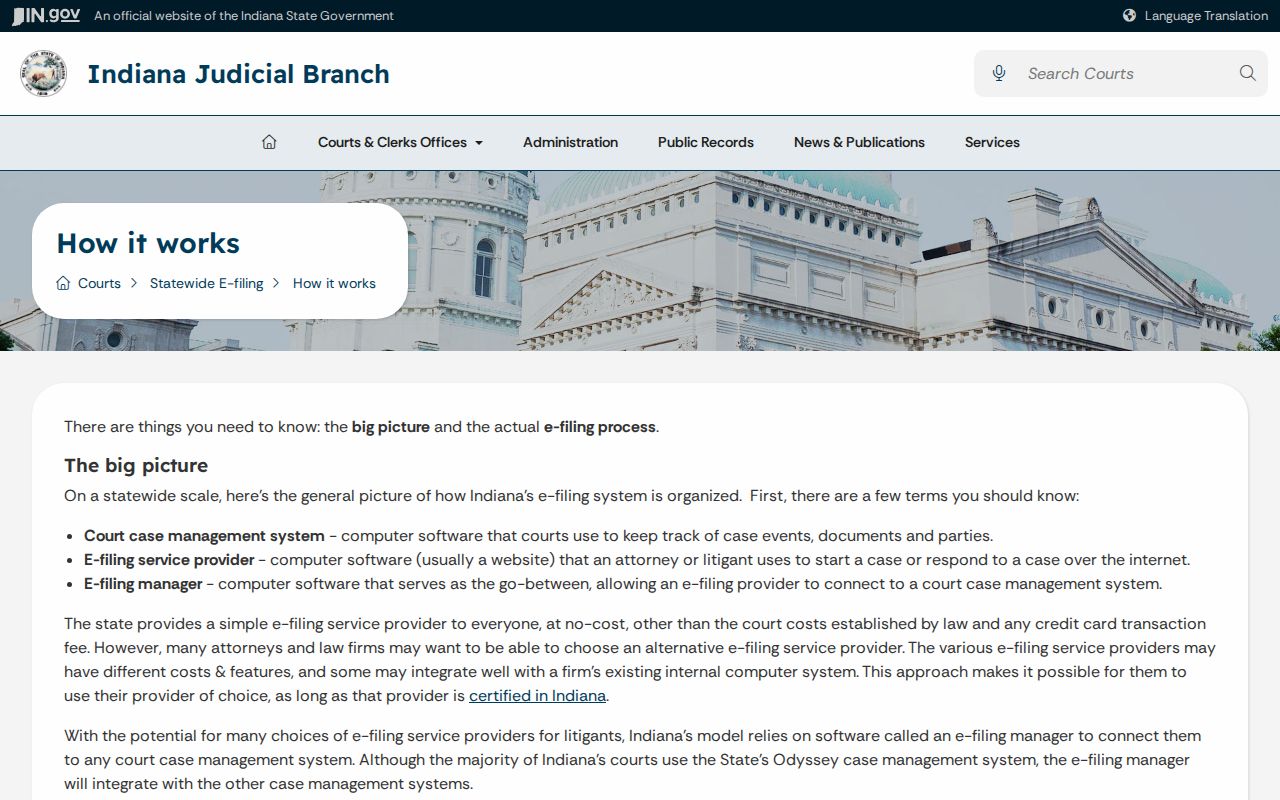
The workflow explains how a filed item and its later public Madison County record display are separate stages.
Fees and Certified Copies
An ordinary copy reproduces the public record. A certified copy bears the Clerk's authentication and is used when the recipient requires official proof. Ask what form is needed before paying. A MyCase printout and a Doxpop screen are not certified.
| Item | Official reference |
|---|---|
| Copy | $1 per page statewide reference |
| Certificate under seal | $1 per certificate statewide reference |
| Transcript of judgment lien | $3 cited preparation and recording reference |
| Postage and local transaction details | Confirm with the Madison County Clerk |
Madison County Clerk
16 East 9th Street, Room 213
Anderson, IN 46016
Mail: PO Box 1277, Anderson, IN 46015
765-641-9443
No separate local copy schedule was found. Confirm payment form, total pages, certification, postage, and turnaround before mailing. Do not send cash.
A mail request should include a return address and ask whether a self-addressed envelope is required. Give the exact case number and document date. If the case number is unknown, supply the court, caption, and approximate year so the Clerk can route the inquiry. Probate staff do not perform estate verifications by phone, according to the county page, so locate the case in MyCase and request the actual public record instead.
Missing Madison Court Record Images
A public CCS event can lack a document link. The reason may be the MyCase access matrix, the case type, a confidential document, incomplete digitization, or an older converted file. Absence of an image does not prove absence of the document.
Problem-solving files may include restricted treatment or supervision material. The Madison problem-solving court source appears below.
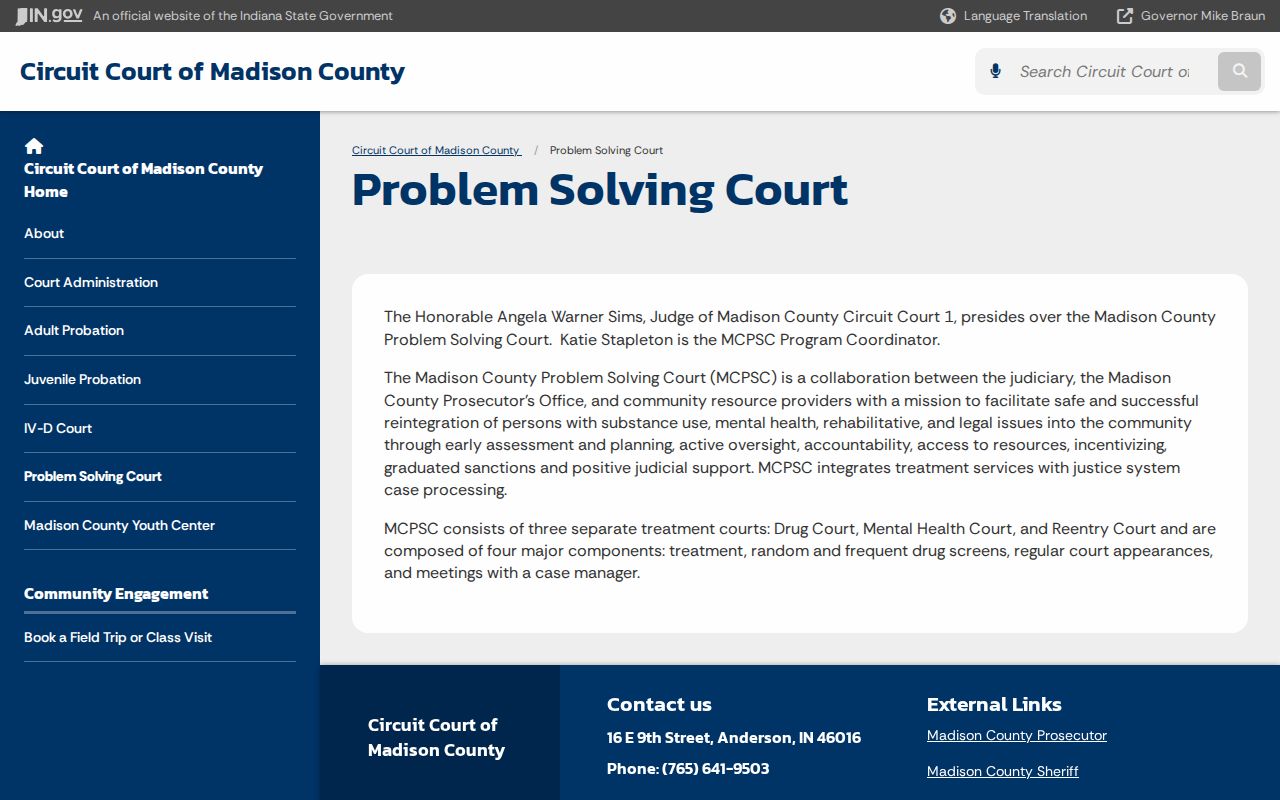
The image supports careful routing without implying that sensitive program records are ordinarily public.
Precise Madison Record Requests
Indiana's Access to Public Records Act applies broad existing-record principles, while court-specific Rules 4, 5, and 9 govern court access and exclusions. A useful request names the case number, court, exact document or CCS date, desired format, and certification need. A demand that asks the Clerk to research or create a new list is not the same as requesting an existing record.
State guidance says oral or hand-delivered APRA requests should receive a response within 24 business hours, while written mail, fax, or email requests should receive a response within seven calendar days. Those periods concern response or acknowledgment, not guaranteed production. Reasonable production time depends on the request.
The Indiana Code Title 5 source is preserved in the assigned capture.
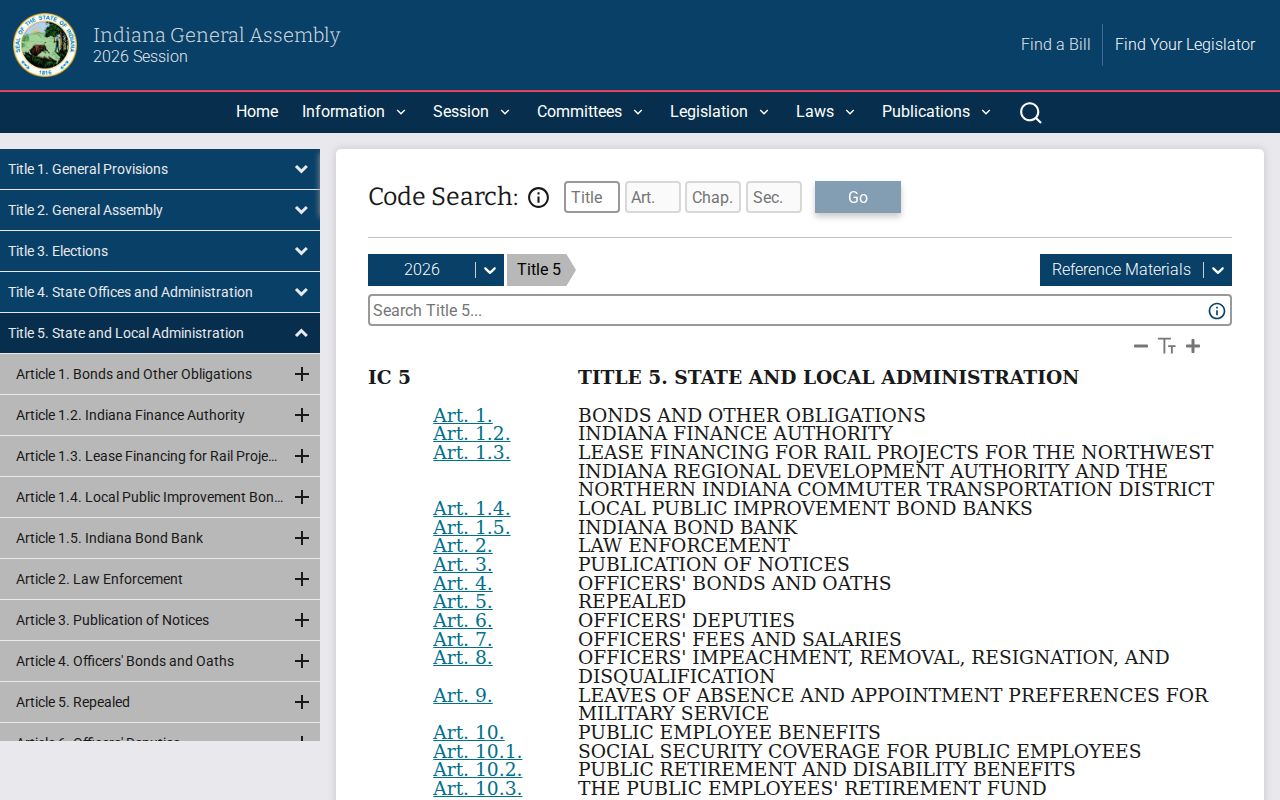
The statute supplies the public-record context while Indiana court rules control protected court material.
Sealed Records and Public Access
Rule 4 begins with public access unless Rule 5, another law, or a court order excludes the record. Rule 5 covers confidential categories, protected identifiers, document-level exclusions, and redaction. Expungement law can also affect access, but a missing MyCase result does not establish expungement.
Key Indiana rules:
Rule 4 states the general public-access principle.
Rule 5 identifies confidential, excluded, and redacted material.
Rule 9 provides the verified process for seeking access to excluded records.
Rule 9 can require notice, a response period, public-interest and harm findings, a hearing, and a written order. It is not a way to bypass an ordinary Clerk request. Use the correct court process and do not expect staff to release sealed material at the counter.